Introduction
Welcome to the definitive appliance market audit by the engineering team at Gas Care by Stove-Technica. After tearing down individual units, our clients repeatedly ask us one question: “Which mid-size air fryer actually gives me the best value for my money?” Today, we are putting the entire 4-6L, 1500W category under the microscope. We have benchmarked the undisputed bestseller—the Philips NA120/00—against its premium sibling and top-tier global rivals from Ninja, Cosori, Instant Vortex, and Gowise.
Best 4-6L Air Fryers in India 2026: Philips vs Instant Vortex
The 4-Litre to 6-Litre segment is the absolute “sweet spot” for the standard Indian household (2 to 5 members). Appliances in this category utilize a 1500W–1700W power draw, which is the exact thermal threshold required to rapidly flash-fry snacks like samosas, French fries, and paneer tikka using up to 90% less oil, without slowly dehydrating them.
But with global brands entering the Indian market in 2026, the price disparity is massive. Should you spend ₹4,600 on an analog Philips, or ₹12,000 on an imported Cosori? Let’s strip away the marketing jargon and look at the raw data.

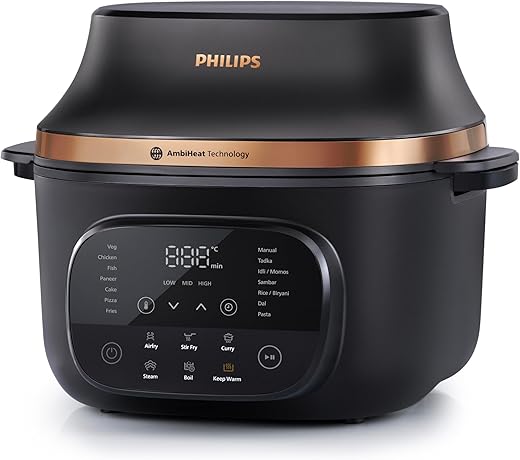
PHILIPS Air Fryer NA120/00, uses up to 90% less fat, 1500W, 4.2 Liter, with Rapid Air Technology (Black), Large
 Amazon.in
 - Philips Airfryer NA120/00 (Large, 4.2 L) lets you cook great tasting food with up to 90% less fat*
- Patented Rapid Air technology with unique starfish design pan ensures evenly fried results without flipping the food
- Preset menus for 12 different ways of cooking - Fry, bake, grill, roast and more. Easily adjust time and temperature — including reheating, defrosting and dehydrating
- Explore 100+ recipes that you love to cook daily with HomeID app
- Energy Saving - with consumption of 70% lesser energy vs a conventional oven*

Instant Vortex Plus 6L Air Fryer, 6-in-1 with 360° EvenCrisp Technology, Touch Control Panel, Uses 95% Less Oil, Air Fry,...
Amazon.in - INSTANT POT: America's most loved Kitchen Appliance Brand. It's Fast, versatile, and convenient tailored to fit your lifestyle. Everyone at Instant Pot Brands is focused on one purpose: to make cooking easy. Every day. In every home.
- DESIGNED FOR INDIAN VOLTAGE: Operates at 230 volts and 50 Hz, ensuring safe and efficient performance tailored for Indian electrical standards.
- SMART 6-IN-1 FUNCTIONALITY: Versatile appliance that combines air frying, grilling, roasting, dehydrating, baking, and reheating, making it a multifunctional kitchen companion.
- SPACIOUS CAPACITY: Features a 5.7-liter inner cooking basket, allowing you to prepare large meals for the entire family in one go.
- GUILT-FREE COOKING: Uses EVENCRISP TECHNOLOGY to deliver the crunch and tenderness of deep-frying with 95% less oil, promoting healthier eating.
- USER-FRIENDLY DIGITAL PANEL: Equipped with a one-touch digital panel that includes six cooking functions, along with customizable cooking time and temperature settings.
- DURABLE STAINLESS-STEEL BODY: Constructed with food-grade stainless steel (SS304), ensuring health and safety while cooking your favourite meals.
- EASY CLEAN-UP: Features a non-stick, dishwasher-safe air fry basket and tray, making clean-up quick and convenient.
- ONE-YEAR WARRANTY: Comes with a 1-year warranty, giving you peace of mind about the product’s reliability and performance.
- EXCELLENT CUSTOMER SUPPORT: With over 90+ dedicated offices across India, you can enjoy doorstep service. Simply reach out via our toll-free number for assistance with demonstrations, installations, and any service requirements.

PHILIPS Air Fryer NA130/00, uses up to 90% less fat, 1700W, 6.2 Liter, with Rapid Air Technology (Black), Extra Large
Amazon.in - Philips Airfryer NA130/00 (Extra Large, 6.2 L) lets you cook great tasting food with up to 90% less fat*
- Patented Rapid Air technology with unique starfish design pan ensures evenly fried results without flipping the food
- Preset menus for 12 different ways of cooking - Fry, bake, grill, roast and more. Easily adjust time and temperature — including reheating, defrosting and dehydrating
- Explore 100+ recipes that you love to cook daily with HomeID app
- Energy Saving - with consumption of 70% lesser energy vs a conventional oven*

COSORI Air Fryer 5 QT (4.7 Litre) Black, 1500W Fast Cooking 9 Preset Menu, 30 Recipes Cookbook, Grill, Broil, Roast,...
Amazon.in - 【SAVE UP TO 55% ON ENERGY BILL】The air fryer has rapid heat circulation technology, max 230℃, 50% faster cooking, consuming less electricity up to 55%
The 2026 Sortable Market Matrix: 4-6L Category
We compiled live April 2026 data—including Amazon India pricing, verified user ratings, and structural build quality—to create this definitive buying matrix.
| Appliance Model | Capacity | Thermal Power | Control Interface & Features | Build Quality & Network | Est. India Price | Gas Care Value Score |
| Philips NA120/00 | 4.2 Litres | 1500W | 12 Ways (Analog Knobs). No App. | Sturdy Aluminum/Plastic. Massive India Service Network. | ₹4,672 – ₹4,921 | 9.8 / 10 |
| Philips NA130/00 | 6.2 Litres | 1700W | Digital Touch (12+ Ways). HomeID App. | Premium Plastic/Metal. Massive India Service Network. | ₹7,589 – ₹8,000 | 9.5 / 10 |
| Instant Vortex Plus | 6.0 Litres | 1500W | 6-in-1 Digital. Clear Viewing Window. | Heavy Stainless Steel. Good structural rigidity. | ~₹11,799 | 8.9 / 10 |
| Ninja (AF Series) | 4.0 – 6.2L | 1500W+ | 4 to 6 Digital Functions. | Premium durability. Dual-zone available on higher models. | ₹8,000 – ₹12,000+ | 9.0 / 10 |
| Cosori (5.8 Qt) | ~5.8 Litres | 1500W | 11+ Digital Presets. Smart App Sync. | Premium Stainless Steel. TurboBlaze tech. | ₹9,000 – ₹12,000+ | 8.7 / 10 |
| GoWISE USA | ~5.8 Litres | 1500W | 8-10 Digital Functions. | Solid Stainless construction. | ₹8,000 – ₹10,000+ | 8.5 / 10 |
The Appliance Showdown: Air Fryer vs. OTG vs. Microwave
A common question we get at the Gas Care showroom is: “If I already have a microwave, do I really need a 1500W air fryer?” The answer comes down to thermodynamics. They do completely different jobs.
- The Microwave (The Reheater): Uses electromagnetic radiation to vibrate water molecules inside the food. It is unmatched for quickly heating liquid-heavy foods like dal, curries, or boiling water. However, it makes pastry and fried foods incredibly soggy. Verdict: Cannot fry or crisp.
- The OTG (The Slow Baker): Uses exposed upper and lower heating rods to create slow, ambient heat. A 30L OTG is the undisputed king for baking large batches of cookies, roasting full turkeys, or making 12-inch pizzas. However, it takes 15 minutes just to preheat and lacks the high-speed fan needed for a rapid crunch. Verdict: Cannot replicate deep-frying.
- The Air Fryer (The Rapid Crisper): A miniaturized convection oven on steroids. By forcing super-heated air in a rapid 360-degree vortex, it flash-sears the outside of the food while locking moisture inside. It cooks 50% faster than an OTG and actually brings the crunch back to leftover samosas—something a microwave will ruin. Verdict: The ultimate deep-fryer replacement and fast-snack engine.
The “Import Trap”: Ninja, Cosori, and GoWISE
Before analyzing the features, Indian buyers must understand the reality of purchasing global heavyweights like Ninja, Cosori, or GoWISE in 2026.
The Engineering Reality:
These brands manufacture exceptional, world-class appliances. Cosori’s TurboBlaze technology and smart-app integrations are incredible, while Ninja’s thermal consistency is legendary in western markets.
The India Market Deficit:
- The Import Tax: You are paying a massive premium. A Cosori that costs $90 in the US routinely costs upwards of ₹11,000 to ₹12,000 in India due to import logistics and duties.
- The After-Sales Network: If the motherboard on your imported GoWISE or Ninja fries due to a voltage spike during the Indian monsoon, finding OEM replacement parts or an authorized service center locally is a nightmare.
- The Gas Care Verdict: Unless you have a specific requirement for Cosori’s smart-home integration or Ninja’s dual-basket architecture (found on their pricier models), spending ₹12,000+ on these imported units yields a poor Return on Investment (ROI) compared to domestic availability.
The Feature Showdown: Philips vs. Instant Vortex
If we filter out the heavy import premiums, the real battle in the Indian market comes down to Philips (the reliable incumbent) and Instant Vortex (the premium innovator).

The Philips Philosophy (NA120 & NA130)
Philips relies entirely on their patented Rapid Air Technology (the starfish-shaped pan design). This creates a flawless 360-degree heat vortex that cooks incredibly evenly.

PHILIPS Air Fryer NA120/00, uses up to 90% less fat, 1500W, 4.2 Liter, with Rapid Air Technology (Black), Large
Original price was: ₹5,995.00.₹4,706.00Current price is: ₹4,706.00. -22%
|



|
- The NA120/00 (4.2L): This is the undisputed value champion of India. For under ₹5,000, you get raw 1500W power and tank-like durability. It uses analog dials, meaning there are zero digital motherboards to fail over time. It is foolproof, highly affordable, and perfect for a family of 3 to 4.
- The NA130/00 (6.2L): If you are feeding a family of 5 or 6, the NA120 is too small. The NA130 jumps to 1700W, upgrades to a digital touch interface, and expands the basket to 6.2L. At roughly ₹7,989, it offers the best high-capacity, domestic value.
The Instant Vortex Plus (6L)
Priced at a premium ₹11,799, the Instant Vortex targets the culinary enthusiast who hates the “blind cooking” aspect of the Philips models.
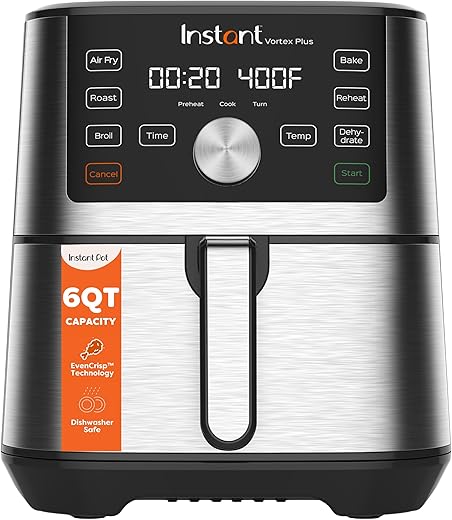
Instant Vortex Plus 6L Air Fryer, 6-in-1 with 360° EvenCrisp Technology, Touch Control Panel, Uses 95% Less Oil, Air Fry, Roast, Grill, Bake,…
Original price was: ₹20,999.00.₹11,998.00Current price is: ₹11,998.00. -43%
|
- The Clear Window: The Vortex Plus features a heavily insulated glass viewing window and an internal oven light. You can watch your paneer tikka brown in real-time and stop the cycle at the exact second of perfection.
- EvenCrisp Tech: While slightly different from Philips’ starfish design, the 1500W EvenCrisp technology delivers equally spectacular, oil-free crunch.

In previous part, we exposed the “import trap” of global brands like Cosori and Ninja, and we broke down the core thermal technologies separating Philips from Instant Vortex. Now, we translate that raw engineering data into daily kitchen realities and deliver our final 2026 buying verdicts.
The Indian Kitchen Use-Case Scenarios
Specs on a box mean very little until you are trying to rush evening snacks for unexpected guests. Here is how these 1500W–1700W machines actually perform under the stress of an Indian kitchen:
The Daily Snacker (Samosas, Fries, Pakoras)
- The Winner: Philips NA120/00 (4.2L)
- The Engineering Reality: For frozen foods that require zero added oil, or fresh snacks that need just a light brush of ghee, the 1500W Philips StarPlate design is unmatched in the sub-₹5,000 category. It flash-fries perfectly. The analog dials are actually an advantage here: simply twist to 200°C, twist to 12 minutes, and walk away.
The Full Family Roast (Tandoori Chicken, Baked Dishes)
- The Winner: Philips NA130/00 Premium (6.2L)
- The Engineering Reality: You cannot comfortably fit an entire marinated chicken or large batches of paneer tikka in a 4.2L basket without choking the airflow. The NA130 steps up to a massive 6.2L capacity and increases the thermal output to 1700W to compensate for the larger volume. It ensures the center of the meat reaches safe temperatures while maintaining that crucial exterior char.
The Precision Baker & Recipe Innovator
- The Winner: Instant Vortex Plus (6L) or Cosori (5.8Qt)
- The Engineering Reality: If you are baking delicate muffins, dehydrating fruit, or following strict macro-recipes, you cannot rely on analog guesswork. You need exact digital temperature control. The Instant Vortex gives you a viewing window to monitor the exact browning level of your baking, while Cosori (if you are willing to pay the import premium) offers the absolute best smart-app integration for precision cooking.
The Gas Care Safety Audit: Health Myths & Non-Stick Realities
When upgrading to an oil-free appliance, many health-conscious buyers worry about the safety of high-heat plastics and non-stick coatings. Let’s look at the engineering facts:
1. The Acrylamide Advantage: When you deep-fry starchy foods (like potatoes for French fries) in boiling oil, a chemical compound called acrylamide is formed, which has been linked to an increased risk of cancer. Clinical studies show that air frying reduces acrylamide formation by up to 90% compared to traditional deep-fat frying.
2. The Teflon / Non-Stick Reality: Almost all models in this 4-6L category (Philips, Instant Vortex) use a PTFE (Teflon) non-stick coating. Is it toxic? No, provided you use it correctly.
- PTFE only begins to degrade and release harmful fumes if heated above 260°C (500°F).
- All the air fryers on our list are electronically hardware-locked to a maximum temperature of 200°C (400°F). The machine is physically incapable of reaching toxic temperatures.
- The Gas Care Warning: The coating only becomes a health hazard if you scratch it with a steel scrubber (juni) and ingest the flaking metal. Treat the basket gently, and it is 100% food-safe.
The Reality Check: What to Watch Out For
Regardless of which brand you choose, adding a 1500W+ high-velocity appliance to your countertop comes with a few universal trade-offs:
- The Acoustic Profile: Moving hot air at extreme speeds requires a massive exhaust fan. All models in this comparison will produce a noticeable “whirring” sound, comparable to a kitchen chimney running on medium speed.
- Power Grid Demands: These are heavy-duty thermal appliances. You must plug them into a dedicated 15 Amp or 20 Amp socket. Plugging a 1500W or 1700W fryer into a standard 5 Amp socket will melt the wiring over time.
- Basket Degradation: Whether it is Philips, Ninja, or Instant, the non-stick coating on the baskets will peel if abused. Never use steel wool or abrasive powders. Always soak the basket in warm soapy water and use disposable parchment liners for sticky, sugary marinades.
The 2026 Gas Care Deployment Matrix
After cross-referencing thermal efficiency, capacity, and live April 2026 pricing, here is exactly which air fryer belongs on your countertop:
| Buyer Profile | The Recommended Appliance | The Gas Care ROI Justification |
| The Value-Driven Household (2 to 4 people) | Philips NA120/00 (4.2L) | At roughly ₹4,600 to ₹4,900, it is the undisputed champion. You get patented Rapid Air tech, tank-like durability, and a massive service network for a budget price. |
| The Large Family Upgrader (5+ people) | Philips NA130/00 (6.2L) | Delivers family-sized batches and 1700W digital precision without crossing the psychological ₹10,000 threshold. Excellent domestic value. |
| The Tech & Visibility Enthusiast | Instant Vortex Plus (6L) | If you despise “blind cooking” and are willing to pay ₹11,000+, the clear viewing window and heavy stainless-steel build make this the premium winner. |
| The Smart-Home Importer | Cosori TurboBlaze / Ninja | Highly recommended only if budget is not an issue and you are comfortable dealing with imported warranty networks. |
The Gas Care Accessory Kit: Protect Your Investment
If you are purchasing a Philips NA120 or an Instant Vortex today, you need to protect the non-stick coating to ensure it lasts the full 5-to-7-year lifespan. Here are the three non-negotiable accessories our technicians recommend:
- Food-Grade Parchment Liners: Do not put sticky, sugary tandoori marinades directly onto the bare metal basket; the baked-on carbon will ruin the coating. Always drop a disposable perforated parchment liner in first. (Warning: Only put the liner in when there is heavy food on top of it to prevent it from flying into the heater). 2. The Oil Spritzer / Silicone Brush: To get the perfect golden-brown crust on fresh Indian snacks, you need a microscopic layer of oil. Pouring oil from a bottle will drown the food. Buy a cheap glass oil spritzer or a silicone brush to lightly coat your paneer and samosas.
- Silicone-Tipped Tongs: Never use steel spoons, forks, or standard metal kitchen tongs to pull food out of your air fryer. One accidental scrape will permanently scratch the non-stick pan. Use high-heat silicone-tipped tongs exclusively.
The Final Value Verdict
The 4-6L air fryer segment has matured incredibly by 2026, offering genuine replacements for deep-frying with up to 90% less oil.
While international heavyweights like Cosori and Ninja build spectacular machines, their imported price tags and limited Indian service networks drastically hurt their overall value. The Instant Vortex Plus remains a brilliant premium option for those who demand a viewing window.
However, the Gas Care 2026 Value Champion is definitively the Philips NA120/00.
It strips away the touchscreens, the Wi-Fi, and the gimmicks, leaving only what actually matters: a highly durable 1500W thermal engine, the patented StarPlate airflow system, and an unbeatable price tag of under ₹5,000. It is the smartest, most reliable entry point into oil-free cooking for the modern Indian kitchen.
The Gas Care Expert FAQs: 4-6L Air Fryers in India
When clients visit our showroom or contact our technical team to replace their deep-frying kadhai with a countertop air fryer, they bring up very specific concerns about power, capacity, and brand reliability. Here are the most critical questions regarding the 4-6L segment, answered directly by our engineering team:
Q: Is the Philips NA120/00 (4.2L) big enough for a joint family?
A: No, it is not. A 4.2L basket is ideal for 2 to 4 people. If you are cooking for a joint family of 5 or more, cramming samosas or chicken pieces into a 4.2L basket will block the Rapid Air vortex, resulting in soggy, unevenly cooked food. For larger families, you must upgrade to the 6-Litre category, such as the Philips NA130/00 or the Instant Vortex Plus, which provides the necessary flat surface area for large batch cooking.
Q: Why does Gas Care advise against buying premium imported brands like Ninja or Cosori?
A: From a pure engineering standpoint, Cosori and Ninja make spectacular appliances. The issue is the Indian aftermarket. Because these brands do not have a massive, localized manufacturing and service footprint in India, you pay a heavy import premium. More importantly, if a severe voltage spike during the monsoon fries your motherboard, finding authorized replacement parts or a local service center for an imported Cosori is incredibly difficult compared to the ubiquitous Philips service network.
Q: Do I need a special plug point for a 1500W or 1700W air fryer?
A: Absolutely. This is the most common safety violation we see in domestic kitchens. A 1500W heating element draws massive peak power. You cannot plug these appliances into a standard 5 Amp or 6 Amp socket (the ones used for phone chargers or mixers). You must plug an air fryer into a heavy-duty 15 Amp or 20 Amp socket—the larger wall sockets designed for refrigerators and geysers. Using a small socket will quickly melt the wiring and create a severe fire hazard.
Q: Will an air fryer increase my monthly electricity bill significantly?
A: No, they are highly energy-efficient. While 1500W sounds like a lot, the appliance cooks food up to 50% faster than a conventional oven. Running a 1500W fryer at maximum heat for one full hour consumes 1.5 units of electricity. Since a typical batch of fries or paneer tikka takes only 15 to 20 minutes, the actual electricity cost per meal is roughly ₹3 to ₹5, making it highly economical for daily use.
Q: Do I actually use “zero oil” for Indian snacks?
A: This depends entirely on whether the food is fresh or frozen. Pre-packaged frozen snacks (like McCain fries or frozen nuggets) already contain residual industrial fats; you can cook these with absolutely zero added oil. However, for fresh Indian snacks made from scratch—like handmade pakoras, bread rolls, or marinated chicken—you must use a silicone brush to apply a microscopic layer of oil or ghee. Without this light coating, the hot air will still cook the food, but the exterior will look pale and powdery rather than golden-brown.
Q: Can I use aluminum foil or baking paper in these air fryers?
A: Yes, but you must follow a strict thermodynamic safety rule: the foil or paper must be weighed down by heavy food. The 1500W exhaust fan generates a high-velocity air vortex. If you place a lightweight, empty piece of foil or parchment paper inside the basket during preheating, the fan will suck it upward directly into the glowing red heating coil, which will instantly start a fire.
People Also Ask (PAA) – Best 4-6L Air Fryers in India
Which capacity is better: a 4L or a 6L air fryer?
The right capacity depends entirely on your household size and cooking habits. A 4L to 4.2L air fryer (like the Philips NA120/00) is the perfect size for bachelors, couples, or a 3-person home making evening snacks. However, if you are cooking for a family of 4 to 6 people, a 4L basket will force you to cook in multiple batches. Upgrading to a 6L to 6.5L model (like the Philips NA130/00 or Instant Vortex) ensures you can roast a whole chicken or make enough fries for the entire family in a single 20-minute run.
Is Philips better than Instant Vortex or Cosori?
Each brand dominates a different category. Philips is the undisputed king of reliability and airflow physics; their patented Rapid Air “StarPlate” design ensures perfectly even cooking, and their massive Indian service network offers peace of mind. Instant Vortex and Cosori offer superior modern features—such as clear viewing windows, smart-app connectivity, and digital precision. However, global brands like Cosori often carry a heavy import tax in India and lack the localized aftermarket support that Philips provides.
Can I bake cakes and cookies in a 1500W air fryer?
Yes. An air fryer is fundamentally a highly efficient, miniaturized convection oven. The 1500W thermal coil and high-speed fan create a perfectly stable baking environment. You can easily bake sponge cakes, muffins, and cookies by placing a standard oven-safe baking tin directly into the basket. If you are baking frequently, digital models (like the 6L Instant Vortex) are generally preferred over analog models because they allow for precise, to-the-minute temperature control.
How much does running a 1500W air fryer cost in electricity?
Despite the high wattage, air fryers are incredibly cost-effective. A 1500W appliance consumes 1.5 units (kWh) of electricity if it runs continuously for one full hour. Taking standard residential tariffs into account (such as the KSEB rates here in Kerala, roughly ₹6.50 to ₹7 per unit), running the fryer for a full hour costs about ₹10. Because air fryers cook extremely fast—completing most Indian snacks in just 15 minutes—the actual electricity cost per meal is only around ₹2.50 to ₹3.
Are analog air fryers more durable than digital touchscreens?
From a strict engineering and repair perspective, yes. Digital touchscreens rely on internal motherboards that are highly sensitive to the heat, grease, and moisture common in heavy-duty Indian cooking. Analog air fryers (like the Philips NA120/00) use mechanical dials that are virtually indestructible. While they lack the precise timers of their digital counterparts, they have a significantly lower hardware failure rate over a 5 to 7-year lifespan.
Why are brands like Ninja and Gowise so expensive in India?
Brands like Ninja, Cosori, and GoWISE USA are heavily praised in western markets, but they do not manufacture their units locally in India. When you purchase them on Indian e-commerce platforms, you are paying a massive premium covering international shipping, import logistics, and heavy customs duties. You are often paying ₹12,000 for an appliance that retails for the equivalent of ₹6,000 in the US, drastically lowering their overall value for the Indian consumer.
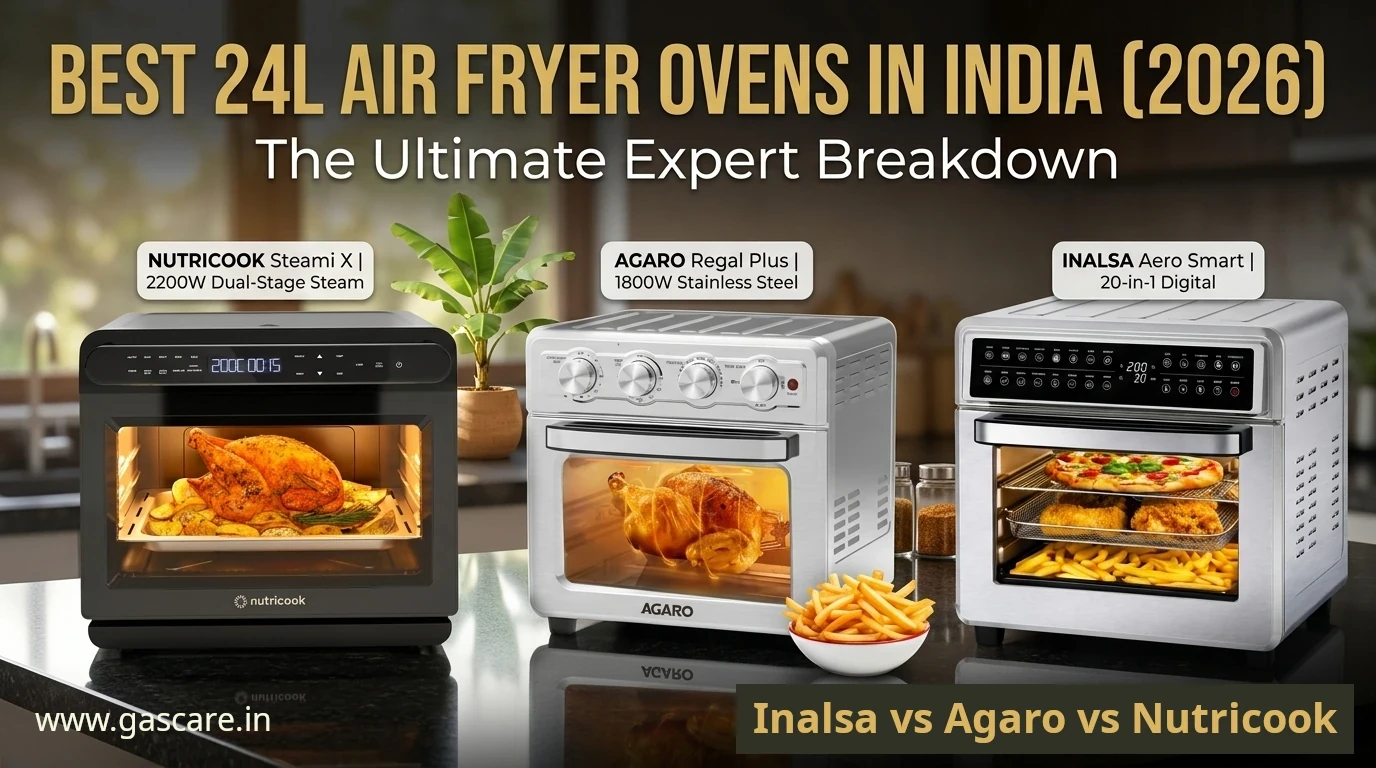
Best 24L Air Fryer Ovens in India (2026): The Ultimate Expert Breakdown
American Micronic 6.5L Air Fryer Review (2026): Best for Indian Kitchens?
Pigeon Healthifry Plus 4.2L 1400 W Digital Air Fryer Review (2026): A ₹3,165 Bargain or a Risky Buy?
We put the budget-friendly Pigeon Healthifry Plus 4.2L Digital Air Fryer to the test. Discover if this 1400W appliance is the ultimate entry-level choice for healthy, oil-free Indian cooking or if you should skip it.
The 2026 Engineering Audit: Philips Air Fryer NA130/00 (6.2L) Review
Tired of cheap digital air fryers breaking in months? We tear down the heavy-duty Philips Air Fryer NA130/00 (6.2L) to evaluate its bulletproof analogue dials, 1700W RapidAir technology, and real-world value at ₹6,630.
The Ultimate Philips NA120/00 Recipe Guide 2026: 20 Indian Classics Perfected
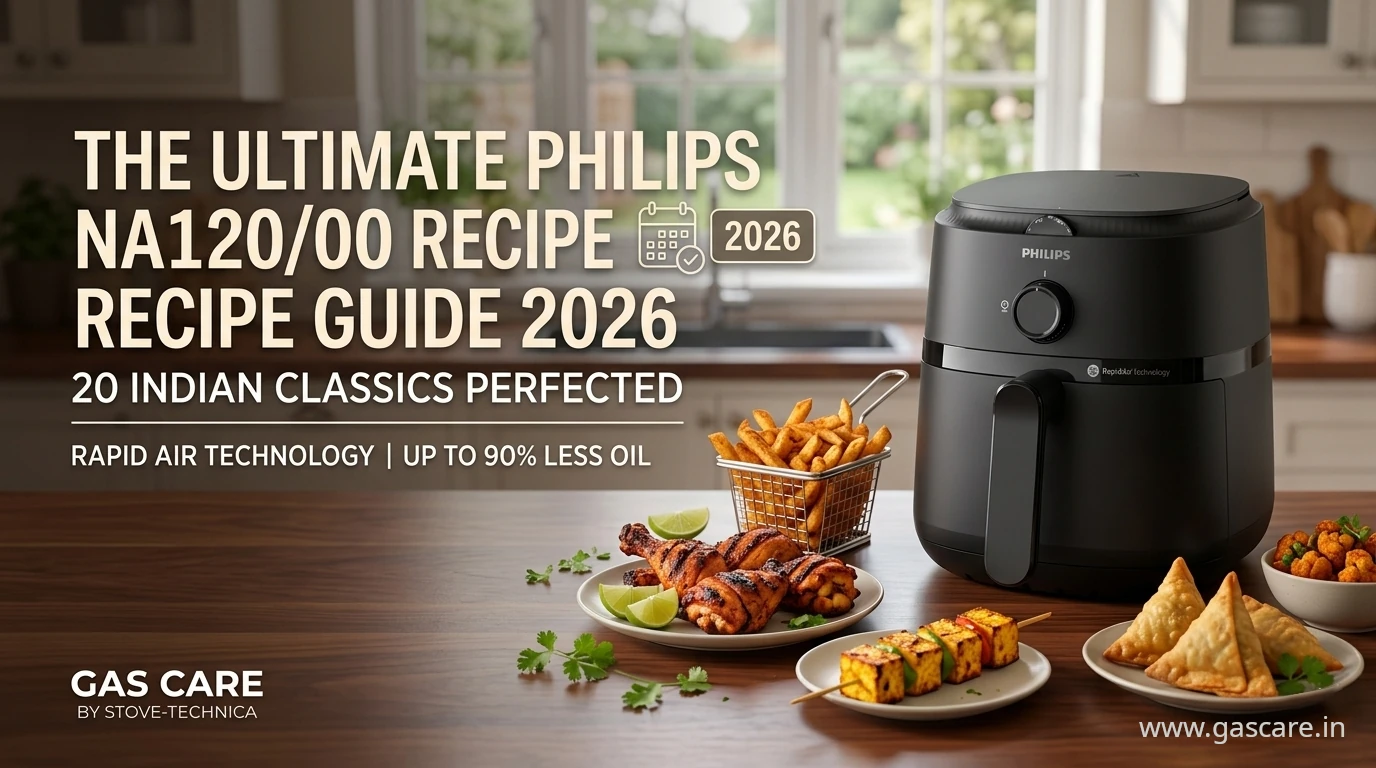
Stop guessing the right temperature for your snacks! Our ultimate cooking guide for the Philips NA120/00 Air Fryer reveals the exact time, temperature, and step-by-step instructions for 20 popular Indian dishes. From oil-free samosas to perfectly charred tandoori chicken, learn how to master Rapid Air Technology for healthy, crispy, and effortless meals.
The 2026 Engineering Audit: CELLO Airmate Modular Glass Air Fryer Review
Is it time to ditch chemical non-stick coatings forever? Our in-depth teardown of the 4L CELLO Airmate Modular Air Fryer explores the thermodynamics of borosilicate glass, the reality of 1500W top-down heating, and how to safely cook traditional Kerala snacks in a 100% toxin-free environment.
Best 12L Air Fryer Ovens in India (2026): Prestige AirChef vs. Top Competitors
The Ultimate Philips NA221/00 Airfryer Cookbook: 100+ HomeID Recipes Mastered for Indian Kitchens
Master your Philips 2000 Series NA221/00 with our Gas Care expert cookbook. We have curated the top 20 highest-rated Indian recipes from the HomeID app, optimized specifically for the 4.2L basket and RapidAir technology. From oil-free samosas to tandoori chicken, start cooking healthier today!
Philips: Today’s Top Deals

Philips HD6975/00 Digital Oven Toaster Grill, 25 Litre OTG, 1500 Watt with Opti Temp Technology, Chamber light and 10 preset menus (Grey)

Philips HD4944/00 1500W Induction Cooktop Blue & Black

PHILIPS Air Fryer NA352/00 with Rapid Air Technology, 9L capacity, Dual basket (6L & 3L) for full oven tray cooking, 8 Preset Menus, Intuitive…

Philips HD4934/00 1300W Induction Cooktop With Triple MOV For 4Kw Surge Protection With Soft Touch Control | 7 Preset Menus | 3 Years Warranty On…
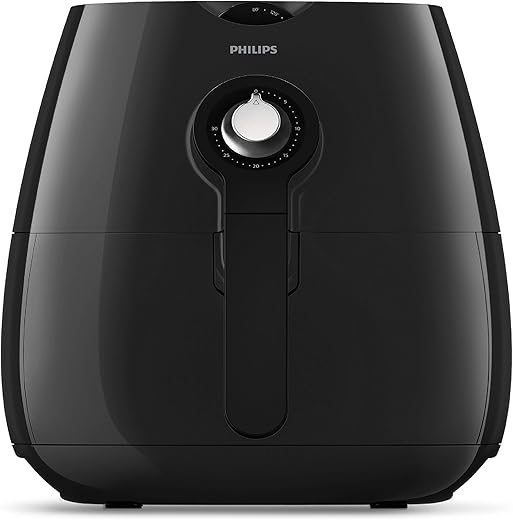
Philips Daily Collection HD9218 Air Fryer, uses up to 90% Less Fat, 1425W, with Rapid Air Technology (Black)
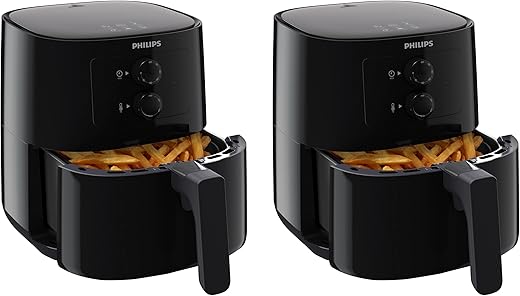
PHILIPS Air Fryer HD9200/90, uses up to 90% less fat, 1400W, 4.1 Liter, with Rapid Air Technology (Black), Large (Pack of 2)

PHILIPS HD9270/70 2000 Watt Digital Air Fryer with Rapid Air Technology (Black)6.2 liter

Philips Air Fryer NA120/00, Black, 1500 W, 4.2 L

Philips Airfryer Party Sizzler Kit with Double layer grill rack, skewers, HD9820/01, Compatible with Extra Large Airfryer

Philips Airfryer Combo Accessory Kit H D9855/01, Compatible with Extra Large Airfryer

PHILIPS Air Fryer HD9200/90, uses up to 90% less fat, 1400W, 4.1 Liter, with Rapid Air Technology (Black), Large

PHILIPS NA221/00 4.2L 1500 Watt Digital Air Fryer with Rapid Air Technology (Black) -NA221/00

Philips 2000 Series Airfryer – 4.2L Capacity, RapidAir Technology, 13-in-1 Presets, Touchscreen Control, Cooking Window, Up to 90% Less Fat (NA221/00)

PHILIPS Digital Air Fryer HD9252/90 with Touch Panel, uses up to 90% less fat, 7 Pre-set Menu, 1400W, 4.1 Liter, with Rapid Air Technology (Black),…

PHILIPS Air Fryer NA231/00 with touch panel, uses up to 90% less fat, 1700W, 6.2 Liter, with Rapid Air Technology (Black),Cooking window, Extra Large
PHILIPS Air Fryer NA130/00, uses up to 90% less fat, 1700W, 6.2 Liter, with Rapid Air Technology (Black), Extra Large
PHILIPS Air Fryer NA120/00, uses up to 90% less fat, 1500W, 4.2 Liter, with Rapid Air Technology (Black), Large